RSA Mastery: Secrets to the Best Trade Show Booths with Sarah Thaler
In a recent No Trust podcast conversation, we sat down with event marketing expert Sarah Thaler to talk about what really goes into building a successful presence at RSAC — and how both vendors and attendees can get more value from the experience.
PODCAST
John Spiegel
3/12/20269 min read
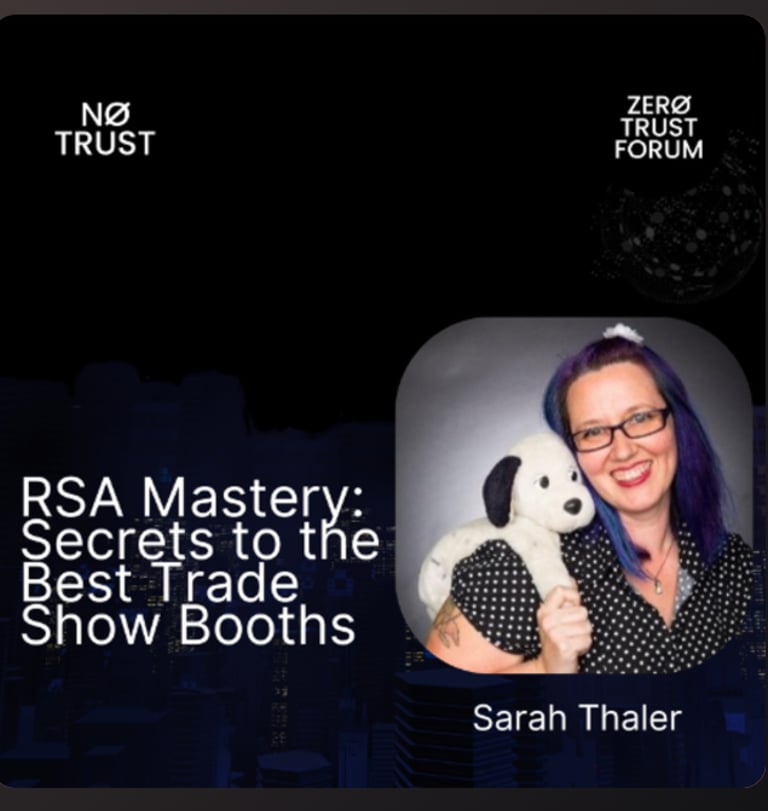
Behind the Booth: What RSA Attendees Don’t Realize About the Expo Floor - With Sarah Thaler
From the outside, it looks chaotic: flashing lights, massive booths, goats, coffee stands, swag bags, and tens of thousands of practitioners wandering the expo floor.
But what most attendees never see is the year-long planning machine behind those booths.
In a recent No Trust podcast conversation, we sat down with event marketing expert Sarah Thaler to talk about what really goes into building a successful presence at RSA — and how both vendors and attendees can get more value from the experience.
Here’s what we learned.
RSA Booths Are Planned a Year in Advance
Most people assume vendors design their booths a few months before the event.
The reality?
Planning often starts while the previous RSA is still happening.
At RSA, companies frequently book their booth for the next year while standing on the show floor — choosing from remaining space based on a priority ranking tied to previous sponsorship and spend.
That means vendors are committing six-figure investments before they know:
What their ROI will be
What product launches they’ll highlight
Who their neighbors will be
Whether the show will even be successful
As Sarah explains, booth strategy must align with business goals:
“The strategy of being at a trade show is to align back to the business goals… making sure you're reaching the right people and delivering clear messaging.”
Standing Out in a Sea of 5,000 Vendors
RSA is unlike most conferences.
Instead of one expo hall, it’s multiple halls packed with vendors competing for attention.
So how do companies stand out?
Many rely on spectacle:
Goats
Puppies
Monster trucks
Custom swag
Coffee bars
Interactive demos
But attention doesn’t always equal impact.
Sarah pointed out something important:
People may remember the goat… but not what the company was selling.
The best booths tie their engagement strategy directly to the product story.
A successful booth answers three questions quickly:
What problem do you solve?
Why should I care?
Why should I talk to you right now?
The Secret to Booth Engagement: The Queue
One tactic that consistently works is surprisingly simple:
Create a line. Why?
Because a line creates a captive audience.
When people queue for something—like custom printed t-shirts or coffee—they stay in the booth long enough to start a conversation.
This gives booth staff time to ask:
What company are you with?
What problems are you trying to solve?
What solutions are you exploring?
In other words, the queue becomes a qualification engine.
The Most Important Booth Training Rule
One of Sarah’s biggest pieces of advice for booth staff is deceptively simple:
Face outward.
Booth staff often make a classic mistake — turning inward and talking to each other instead of engaging attendees.
That means potential buyers walk by unnoticed.
Her guidance:
Make eye contact
Smile
Start a human conversation
Not:
“Do you want a demo?”
Instead, start with:
“How’s your show going?”
People remember being treated like people.
And in a conference where attendees receive thousands of follow-up emails, that human connection can be the difference between a conversation and a delete button.
The Biggest Mistakes Vendors Make
After years running cybersecurity events, Sarah sees two mistakes repeatedly.
1. Vague Messaging
If someone can’t understand what your company does in a few seconds, they’ll keep walking.
Buzzwords and fear-based messaging rarely help.
Clear value propositions win.
2. Disengaged Staff
Nothing kills booth traffic faster than staff:
staring at phones
talking to each other
ignoring passersby
Those missed moments represent lost pipeline opportunities.
Advice for First-Time RSA Attendees
RSA can be overwhelming.
40,000+ attendees thousands of vendors dozens of parties and sessions
The best strategy?
Plan before you arrive.
Look at:
the vendor list
booth maps
categories of solutions
Then build a short list of companies you want to visit.
And if you know you want to meet a vendor, schedule the meeting in advance.
Otherwise you risk wandering the floor all day without meaningful conversations.
The Most Practical RSA Advice You’ll Hear
After all the booth strategy talk, Sarah offered the most practical tip of the entire conversation.
Halfway through the day:
Change your socks.
Yes, really.
RSA involves miles of walking across the Moscone campus.
Fresh socks and comfortable shoes can make the difference between surviving the conference — or limping through the last two days.
Final Thought
RSA may look like chaos on the surface.
But behind every booth is:
months of planning
product strategy alignment
staffing models
messaging decisions
and a lot of logistics
Understanding that effort gives attendees a new perspective on the expo floor.
And it reminds vendors of something important:
The real goal isn’t just traffic.
It’s meaningful conversations.
If you'd like, I can also help you turn this into a recurring LinkedIn newsletter format like the Zero Trust Forum site (with sections like Key Insights, Behind the Scenes, Practical Tips, etc.) so every episode becomes a consistent publication.
Listen Here – https://on.soundcloud.com/iGHLxSwccOLH4oCf5r
Cleaned up transcript
No Trust - Behind the Booth: RSA Insights with Sarah Thaler
Jaye Tillson: Hello everyone, and welcome to another episode of No Trust. Today we’re joined by a friend of mine and John’s, Sarah Thaler. Unfortunately, you can’t see the recording—only hear us—but Sarah is known for having the brightest hair color imaginable since the day we met.
Sarah, welcome to the show. Why don’t you introduce yourself and tell our listeners a bit about who you are and what you do?
Sarah Thaler: Thanks for having me. I’m excited to be here.
My name is Sarah Thaler, and I’m an event marketer with many years of experience across different industries. For the past five years, I’ve focused on cybersecurity. My goal with every event and marketing program I run is to create engaging experiences for attendees.
I love working large trade shows because you get to see people’s reactions in real time and connect with so many individuals. Events should be fun—that’s always my approach.
John Spiegel: This episode is part of a series we’re doing leading up to one of the biggest cybersecurity conferences in the world: RSA.
RSA is hosted each year in San Francisco at the Moscone Center. When I first attended, I was blown away by the expo floor. At most conferences, you might see a single hall with vendors. At RSA, it’s multiple halls, corridors, and surrounding spaces. There are thousands of vendors exhibiting.
What we wanted to do today is go behind the scenes and understand how these booths come together. Sarah, you’ve worked closely with us in the past and helped us understand the thought, logistics, and effort that goes into building a booth.
So let’s start there. What’s something attendees don’t realize about the work that goes into creating a booth that’s only on display for four or five days?
Sarah Thaler: There’s a huge amount of behind-the-scenes work.
Planning for a major trade show like RSA can start months—and sometimes a year—in advance. Vendors need to determine the booth design, messaging, audience engagement strategy, and overall experience they want to create.
The most important thing is aligning the event strategy with business goals. Marketing teams are measured on ROI, so we ask questions like:
Are we reaching the right audience?
Are we delivering our message effectively?
Are we solving a problem the audience cares about?
At events like RSA, attendees are usually looking for solutions. They may be evaluating new technologies, researching options, or trying to understand the latest buzzwords.
With thousands of vendors on the show floor, you have to capture attention quickly. Your message must be clear, direct, and focused on how you help solve a problem.
And doing that with just a few lines on a booth backdrop or a short elevator pitch—while 40,000 people walk around—is extremely challenging.
Jaye Tillson: You’ve worked with companies of all sizes. When you walk around RSA, you’ll see everything from small startup booths to massive displays with flashing lights and elaborate structures.
You’ll see goats, dogs, giveaways, race cars, even monster trucks. Some companies spend thousands, others spend millions.
Do the goals differ depending on booth size or company size?
Sarah Thaler: Interestingly, the goal is always the same.
No matter the booth size or budget, you want to communicate your message clearly and make meaningful connections with attendees.
The challenge is simply how much space and budget you have to work with.
Large booths may have more visual impact, but that doesn’t guarantee success. For example, people might remember petting a goat at a booth—but they might not remember what the company actually sells.
So every engagement tactic should connect back to the company’s strategy and messaging.
Even startups with small booths can stand out if their message is clear and their experience is engaging.
Jaye Tillson: One thing I know from working with you is how much planning goes into RSA. You mentioned earlier that planning can start a year in advance.
Walk us through some of those decisions. How do companies determine booth size, location, messaging, and staffing?
Sarah Thaler: Planning early is critical.
For a show like RSA, companies often book their booth for the following year while they’re still attending the current year’s event.
RSA prioritizes booth selection based on factors like how long a company has exhibited and how much they’ve invested historically. When it’s your turn to select, you choose from the remaining available spaces.
You’re making decisions about booth size and location without knowing your eventual ROI or even exactly how the next event will perform.
That means you’re taking a bit of a gamble.
From there, planning typically involves:
Understanding your target audience
Aligning booth messaging with company goals
Designing experiences that attract and retain visitors
Coordinating product launches or announcements
For example, if your product team plans to release something new shortly before RSA, that launch may become the focal point of your booth messaging.
And while you’re planning RSA, you’re also planning other events throughout the year—Black Hat, regional conferences, partner events—so messaging needs to stay consistent.
Jaye Tillson: Let’s talk about engagement. From my experience attending conferences, anything that creates a queue tends to draw attention.
Whether it’s t-shirts, coffee, or something fun, lines attract people.
What tactics have you seen work best?
Sarah Thaler: Queues can be incredibly effective.
For example, we once had an on-demand t-shirt printing station inside our booth. It created a line, and that line gave us time to start conversations with attendees.
When someone is waiting, you can ask questions like:
How’s your show going?
What company do you work for?
What solutions are you looking for?
This allows you to qualify prospects and direct them to the right team members—sales engineers, product specialists, or field experts.
Getting someone into the booth is step one. Keeping them there and starting a meaningful conversation is step two.
Jaye Tillson: Once someone enters your booth, how should staff interact with them?
You gave us training when we worked together, and it made a huge difference.
Sarah Thaler: My number one rule is simple:
Face outward.
Booth staff should always be looking toward attendees, making eye contact, and welcoming people in.
Instead of opening with “Can I give you a demo?”, start with a human conversation.
Ask how their day is going. Ask what sessions they’ve attended. Treat them like people, not leads.
Attendees can tell when they’re being treated like a dollar sign. A personal interaction makes you memorable—and it improves follow-up conversations later.
John Spiegel: Let’s talk about staffing. If you were building the ideal booth team, who would you bring?
Sarah Thaler: A good booth team includes a mix of roles:
SDRs or BDRs as the first point of contact
Account executives who understand the product and can discuss solutions
Solutions engineers who can answer technical questions
Executives typically don’t staff booths. They’re better used for meetings, networking, or speaking sessions.
The key is balance. You don’t want too many staff in the booth because that can feel overwhelming to visitors.
The booth should feel open and welcoming.
Jaye Tillson: What are the biggest mistakes vendors make at conferences?
Sarah Thaler: Two stand out.
First: unclear messaging. If attendees can’t understand what your company does within seconds, they’ll walk past your booth.
Second: disengaged staff. If booth staff are looking at their phones or talking among themselves, people will simply keep walking.
Those missed moments represent lost opportunities.
Jaye Tillson: For attendees, RSA can be overwhelming. Any advice for first-timers?
Sarah Thaler: Plan ahead.
Review the vendor list and the expo map before you arrive. Identify the companies you want to visit and map out a route across the show floor.
It’s impossible to see everything in one day.
If you’re especially interested in a vendor, schedule a meeting in advance so you can have a deeper conversation.
Jaye Tillson: And what’s the one piece of advice you’d give anyone attending RSA?
Sarah Thaler: Change your socks halfway through the day.
You’ll walk miles every day at RSA. Fresh socks make a huge difference.
John Spiegel: I’d also recommend comfortable shoes.
Jaye Tillson: And bring more than one pair of shoes—trust me.
John Spiegel: Before we wrap up, let’s talk about swag. What works and what doesn’t?
Sarah Thaler: Useful items work best.
Attendees travel to conferences, so items like portable chargers, luggage tags, or stain-removal pens are surprisingly popular.
Function beats novelty.
If someone continues using your swag after the conference, they’ll remember your brand.
Jaye Tillson: Final question: What’s your must-visit food spot and must-attend event during RSA?
Sarah Thaler: For food, there’s a small Indian market with a restaurant just behind Moscone that’s fantastic.
For events, I never miss the Cybersecurity Marketing Society meetup. It’s a great community gathering.
And if there’s karaoke anywhere during RSA, I’ll be there.
Jaye Tillson: Sarah, thank you for joining us. Your advice has helped me—and I’m sure it will help many listeners as well.
Sarah Thaler: Thanks for having me. I’m looking forward to seeing everyone in San Francisco.
If you’re on the show floor, just look for the purple hair and say hello.